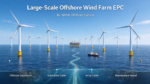
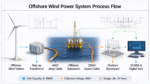
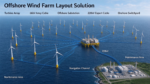
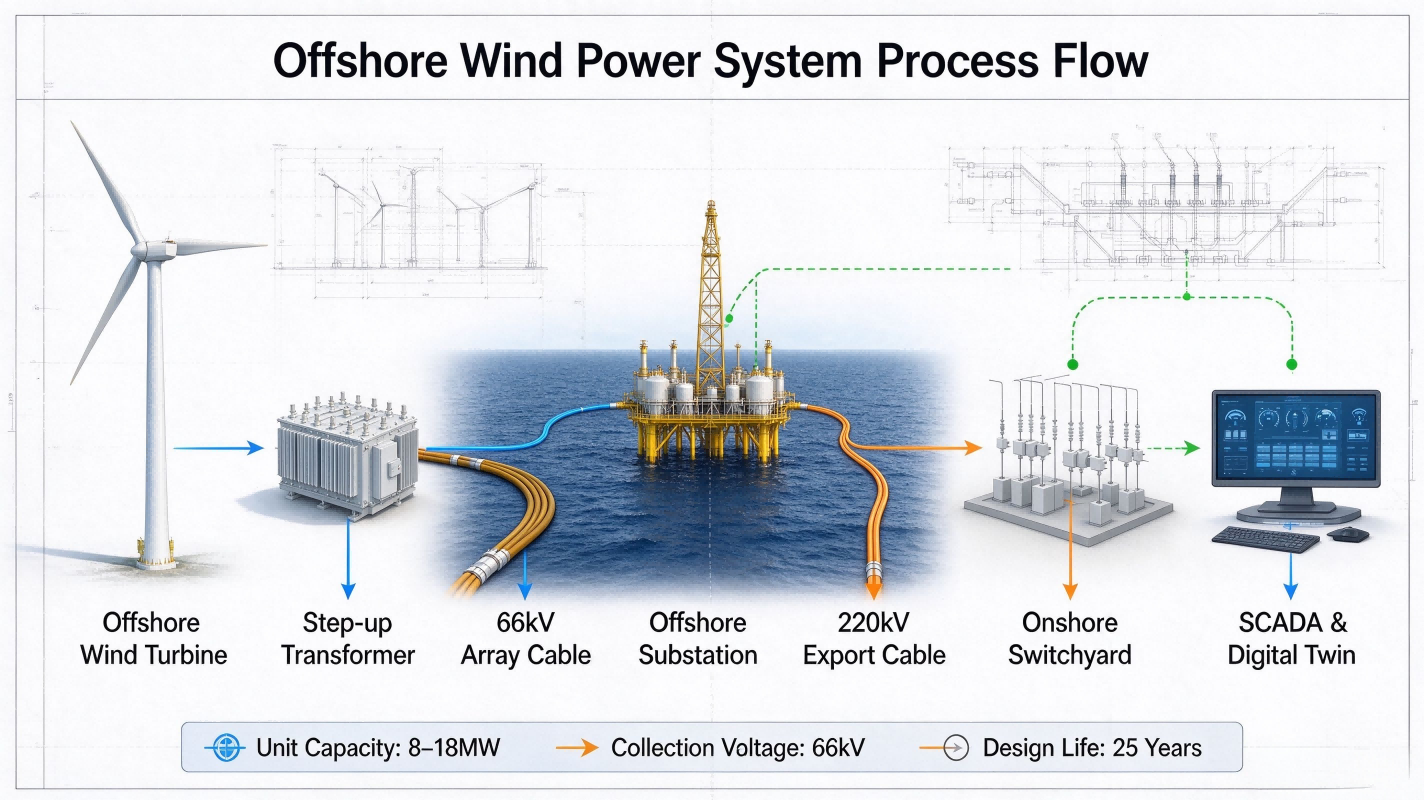
Our offshore wind turbine generator system integrates mature technical advantages from mainstream offshore wind suppliers. We provide a full EPC offshore wind farm solution covering fixed-bottom and floating designs, with unit capacities ranging from 8MW to 18MW. Options include DFIG, semi-direct drive and direct-drive PMSG configurations. The portfolio features typhoon-resistant structure, large-diameter rotor, 66kV offshore collection system, anti-corrosion marine protection, digital twin SCADA and intelligent O&M. Suitable for nearshore, intertidal and deepwater offshore sites. We deliver turbine layout optimization, foundation design, offshore substation, submarine cable installation and grid connection, supporting standalone offshore wind or hybrid coupling with green hydrogen, energy storage and offshore oil & gas power supply.
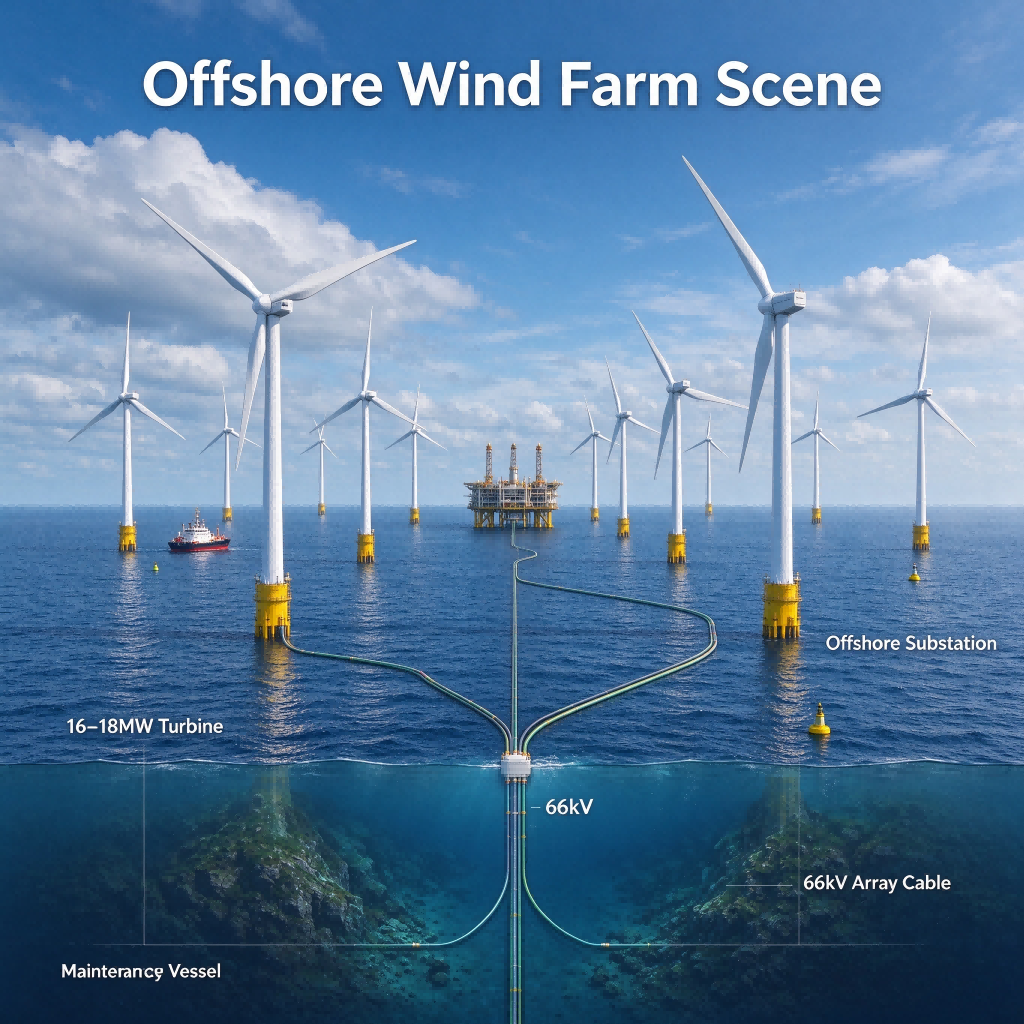
Offshore Wind Turbine Generator System
- 1. **Multi Technical Route Integration**
- Combines semi-direct drive, direct-drive PMSG and DFIG mature technologies, offering 8MW ~ 18MW large offshore models for different water depth and wind conditions.
- 2. **Typhoon & Marine Corrosion Resistant Design**
- Reinforced load structure, C5-M marine anti-corrosion coating, lightning protection system, adapted to extreme marine weather and salt fog environment.
- 3. **Optimized Offshore Foundation & Layout Solution**
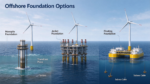
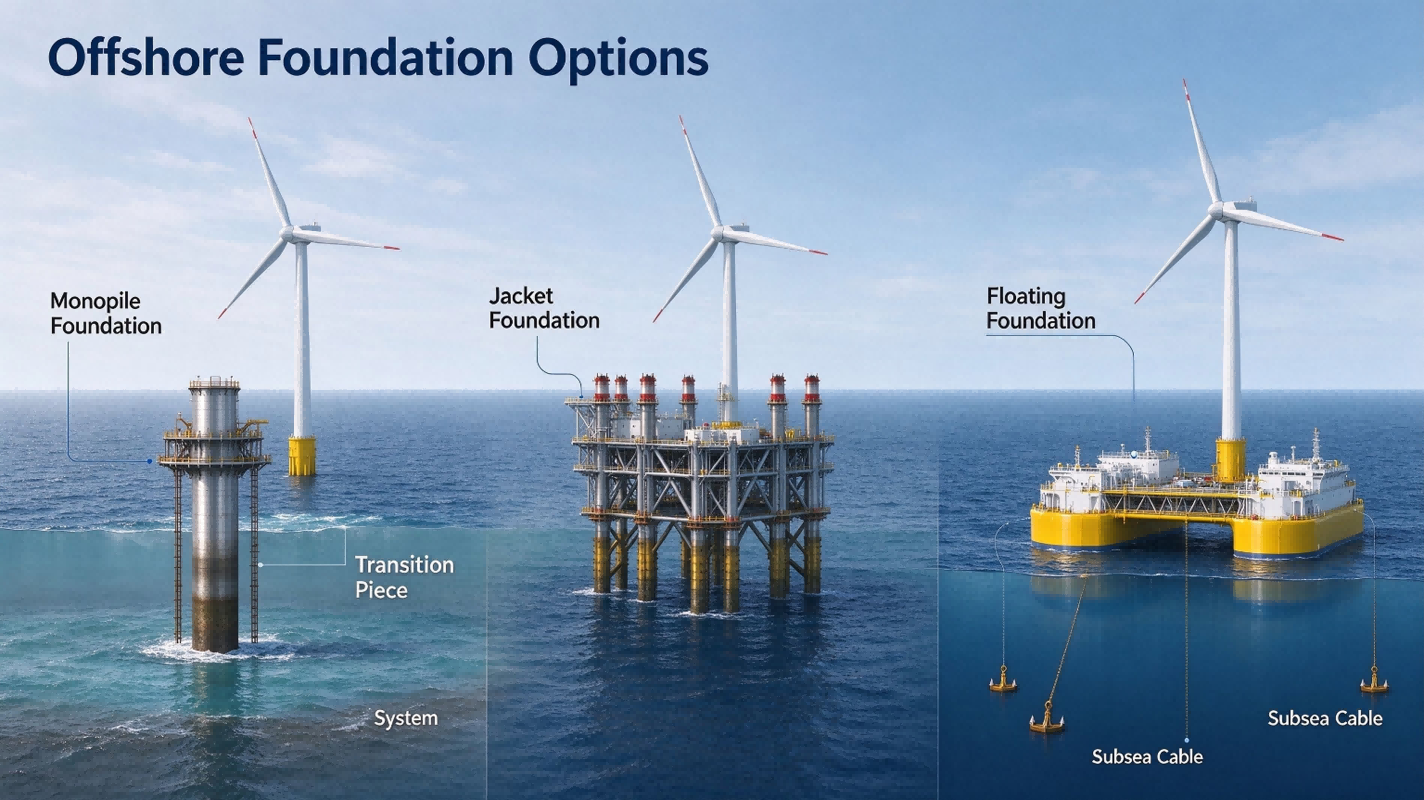
- Flexible foundation schemes: monopile, jacket and floating foundation. Professional micro-siting layout to maximize capacity factor and reduce submarine cable cost.
- 4. **66kV Offshore Medium Voltage Collection & Digital O&M**
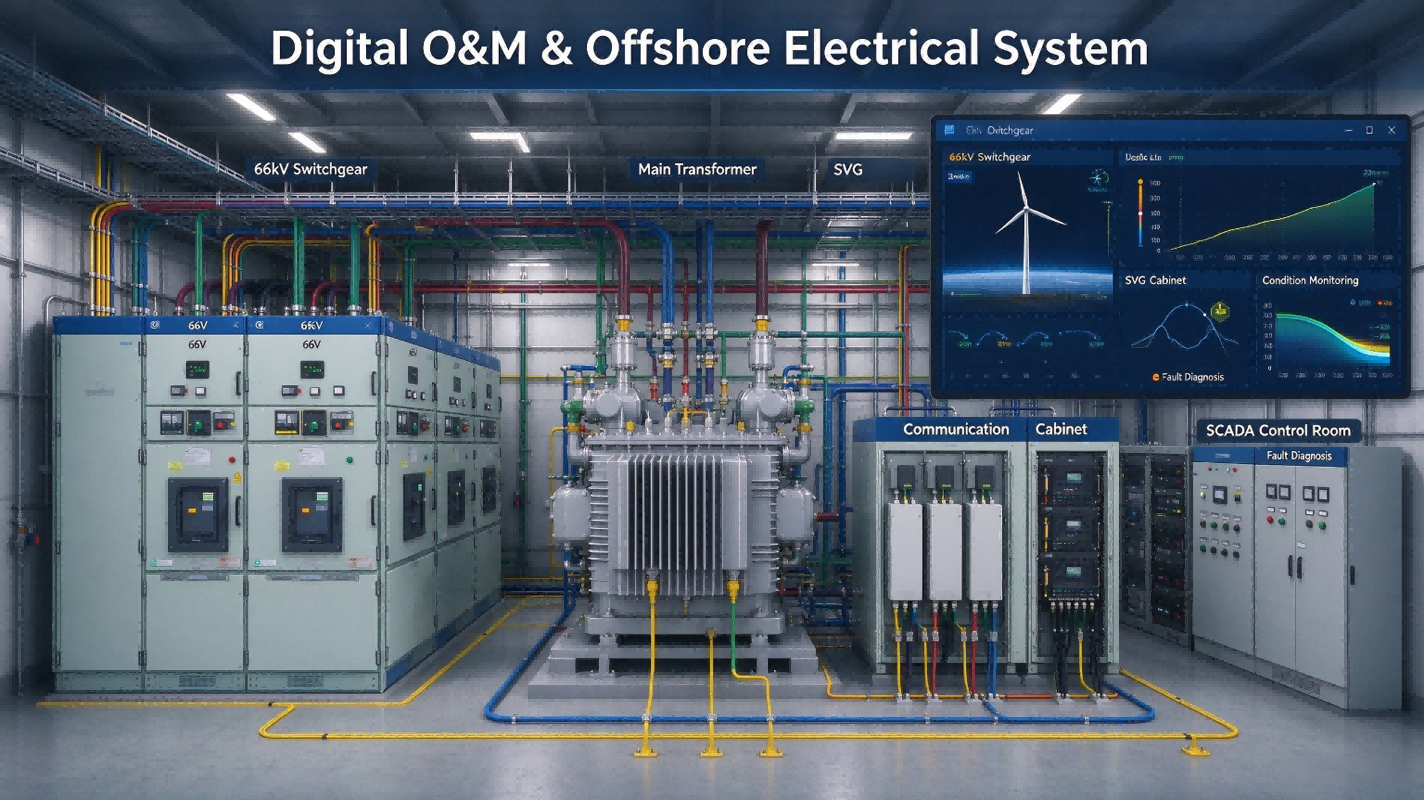
- 66kV offshore collector system reduces cable loss; digital twin, SCADA remote monitoring and intelligent fault diagnosis cut offshore maintenance downtime.
- 5. **Full Turnkey EPC Delivery**
- From wind resource survey, foundation fabrication, turbine installation, offshore substation, submarine cable laying to long-term operation & maintenance; compatible with green hydrogen and offshore energy storage integration.
Offshore Wind Turbine Generator System
- 8MW – 18MW Mega-Scale Platform — single turbine powers ~20,000 households, lowest $/MWh in offshore class.
- Three Drive-Train Options — DFIG, medium-speed semi-direct, direct-drive PMSG, matched to site conditions.
- Typhoon-Class Survivability — design survives 70 m/s extreme wind, IEC TC II typhoon zone certified.
- Monopile / Jacket / Floating Ready — covers 0m to >100m water depth, fixed-bottom and floating.
- Smart O&M & Digital Twin — predictive maintenance, SCADA digital twin, marine logistics optimization.
Product Overview
Our offshore wind turbine platform integrates the most mature offshore wind technology lines from leading Chinese OEMs: doubly-fed induction generator (DFIG) for cost-effective moderate sites, medium-speed semi-direct drive for high-torque reliability in typhoon regions, and direct-drive permanent magnet synchronous generator (PMSG) for low-maintenance deep-sea projects. All platforms share a common modular nacelle design, centralized converter and unified SCADA architecture, reducing spare-parts inventory and O&M cost for multi-turbine wind farms.
The rotor system uses large-scale carbon-fiber blades (up to 128m length) with pre-bend design for maximum swept area while minimizing tower clearance. The tower and transition piece are anti-corrosion coated with C5-M offshore marine grade, designed for 25-year service life in salt-spray environment. We deliver complete offshore wind farm EPC: wind resource assessment (offshore LiDAR), geotechnical survey, foundation design, turbine supply & installation by heavy-lift vessel, inter-array cables, offshore substation platform, export cable to onshore grid, and long-term O&M service.
Core Technical Parameters (Four Main Models)
| Parameter | OSW-8.0 | OSW-11.0 | OSW-16.0 | OSW-18.0 |
|---|---|---|---|---|
| Rated Power | 8.0 MW | 11.0 MW | 16.0 MW | 18.0 MW |
| Rotor Diameter | 180 m | 210 m | 242 m | 260 m |
| Blade Length | 88.4 m | 102 m | 118 m | 128 m |
| Swept Area | 25,400 m² | 34,600 m² | 46,000 m² | 53,100 m² |
| Hub Height (typical) | 100 m | 110 m | 120 m | 130 m |
| Cut-in Wind Speed | 3.0 m/s | 3.0 m/s | 3.0 m/s | 3.0 m/s |
| Rated Wind Speed | 11.0 m/s | 10.5 m/s | 10.0 m/s | 10.0 m/s |
| Cut-out Wind Speed | 25 m/s | 25 m/s | 28 m/s | 30 m/s |
| Survival Wind Speed | 70 m/s (typhoon) | 70 m/s (typhoon) | 70 m/s (typhoon) | 70 m/s (typhoon) |
| Drive Train | DFIG | DFIG / Medium-speed | Medium-speed / PMSG | Direct-drive PMSG |
| Rated Voltage | 66 kV (direct) | 66 kV (direct) | 66 kV (direct) | 66 kV (direct) |
| Wind Class | IEC TC IIB | IEC TC IIB | IEC TC IIB (typhoon) | IEC TC IIB (typhoon) |
| Design Lifetime | 25 years | 25 years | 25 years | 25 years |
| Availability | ≥ 96% | ≥ 96% | ≥ 95% | ≥ 95% |
| Annual Energy Output (CF 42%) | ~29.3 GWh | ~40.3 GWh | ~58.6 GWh | ~65.9 GWh |
Foundation & Installation Options
| Foundation Type | Water Depth Range | Typical Application | Installation Method |
|---|---|---|---|
| Monopile (single pile) | 0 – 40 m | Shallow coastal, North Sea, Southeast Asia | Hydraulic hammer, heavy-lift jack-up vessel |
| Jacket (4-leg lattice) | 30 – 60 m | Medium depth, rocky seabed, typhoon zone | Pin-pile sleeves, installed by crane vessel |
| Tripod / Tripile | 35 – 50 m | Medium-depth high-wave sites | Heavy-lift crane vessel |
| Semi-submersible Floating | > 60 m | Deep water, far-from-shore, Mediterranean / US West Coast | Towed from onshore fabrication yard, moored |
| Spar Buoy Floating | > 100 m | Deep water, high stability requirement | Towed vertically, catenary mooring |
Offshore Wind Farm Layout Scheme
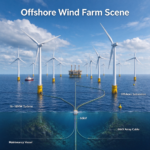
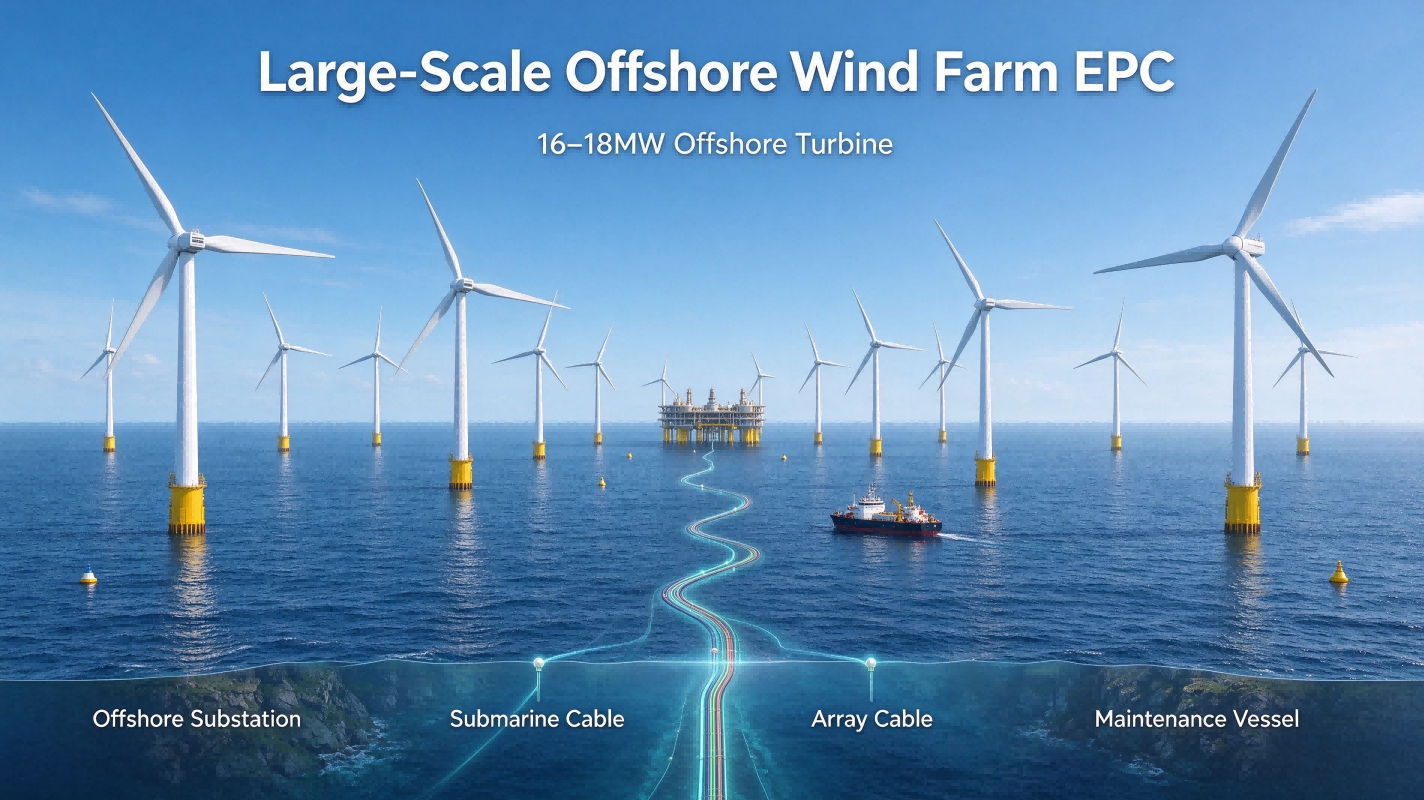
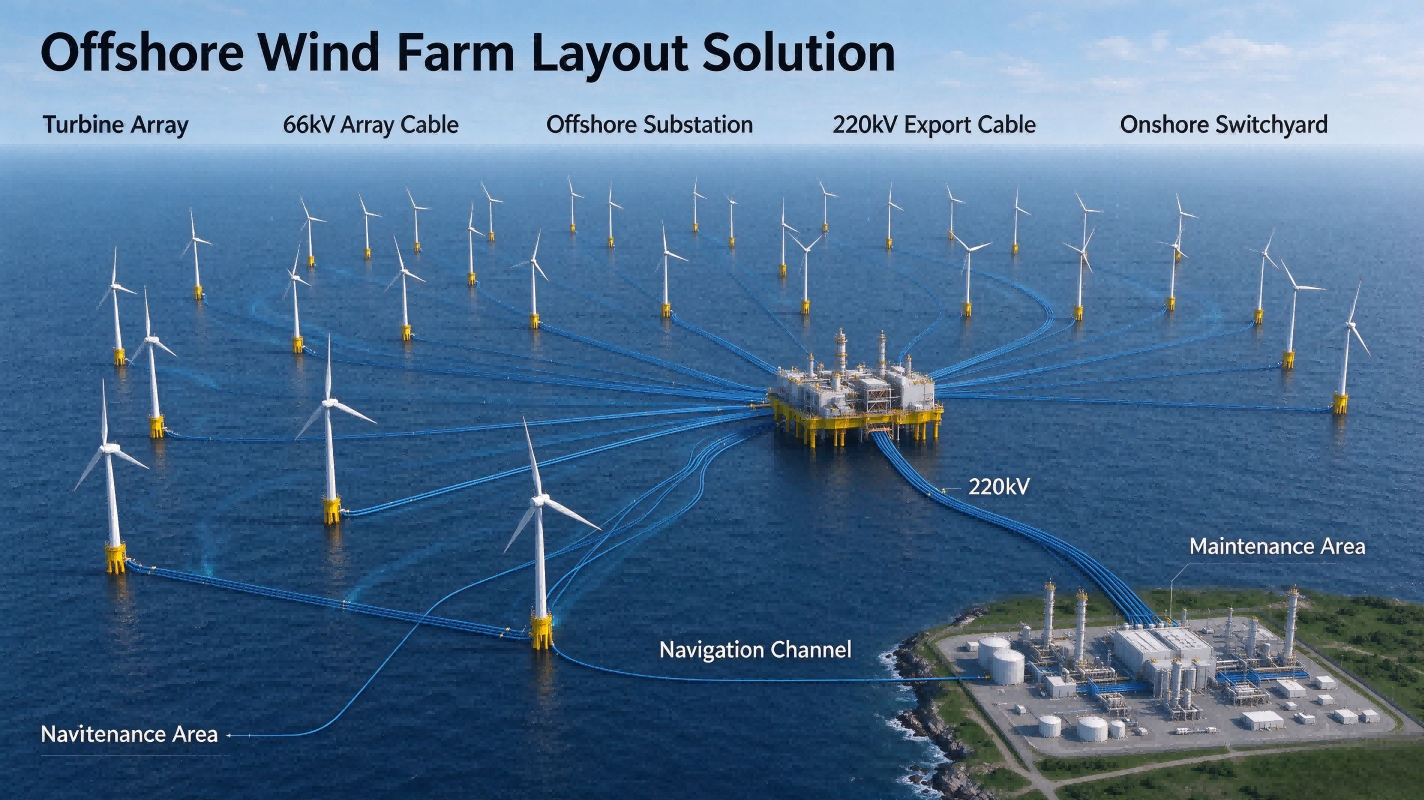
A typical 500 MW offshore wind farm consists of 28–32 × 16–18 MW turbines arranged in a grid pattern parallel to the prevailing wind direction. Inter-array 66kV submarine cables connect turbines to a central offshore substation platform, then export via 220kV / 330kV HVAC or HVDC cable to the onshore grid substation. The recommended spacing is 8–10 rotor diameters along wind direction and 3–5 rotor diameters cross-wind to minimize wake loss.
- 500 MW project: 28 × 18MW or 31 × 16MW turbines, 1 offshore substation, ~80 km inter-array cable, ~40 km export cable.
- 1 GW project: 56 × 18MW turbines, 2 offshore substations, split into two electrical clusters.
- Wake loss target: < 10% after micro-siting optimization.
- Marine traffic exclusion zone: 500m radius around each turbine.
Investment Scale & Payback Period
| Project Scale | Typical Configuration | EPC Total Investment | Static Payback Period |
|---|---|---|---|
| Pilot / Demonstration | 2 × 11 MW = 22 MW (near shore) | $90M – $120M | 10–12 years (demonstration tariff) |
| Medium Commercial Farm | 50 × 11 MW = 550 MW | $2.0B – $2.8B | 8–10 years (fixed tariff / CfD) |
| Large Commercial Farm | 31 × 16 MW = 500 MW | $2.0B – $2.6B | 8–10 years (PPA / auction) |
| Mega-Scale Offshore | 56 × 18 MW = 1,000 MW | $3.8B – $5.0B | 7–9 years (utility-scale PPA) |
| Floating Wind Pilot | 5 × 15 MW = 75 MW (deep water) | $400M – $600M | 10–13 years (floating premium) |
Note: Offshore wind CAPEX breakdown: turbine supply ~45%, foundation ~20%, subsea cable ~15%, offshore substation ~10%, installation & marine logistics ~7%, others ~3%. Key variables: sea depth, distance to shore, port infrastructure, local content requirement, and offshore installation vessel availability.
Typical Application Scenarios
- Near-Shore Wind Farm (0–20km): Close to load center, easier grid connection, lower cable cost.
- Offshore Wind Farm (20–100km): Higher wind resource, larger scale, typical commercial project.
- Deep-Water Floating Wind (>60m depth): Mediterranean, US West Coast, Japan, Korea — where fixed-bottom is infeasible.
- Offshore Wind + Green Hydrogen: Electrolyzer on offshore substation, produces green ammonia / methanol for shipping fuel.
- Island & Coastal Community Power: Replaces expensive diesel generation on remote islands.
- Oil & Gas Platform Decarbonization: Offshore wind powers existing offshore platforms, reduces associated gas flaring.
Full-Life-Cycle Service
- Offshore wind resource assessment (LiDAR buoy / met mast), micro-siting & wake modeling
- Geotechnical survey, foundation design, environmental & social impact assessment
- Turbine supply, monopile/jacket fabrication, marine transport & installation
- Offshore substation platform, inter-array & export cable laying
- Commissioning, grid connection, 24/7 remote SCADA & digital twin monitoring
- 25-year long-term O&M: blade inspection (ROV / drone), gearbox exchange, transformer maintenance
- Port-side base operation vessel (SOV) & crew transfer vessel (CTV) fleet management
Frequently Asked Questions
Related Products
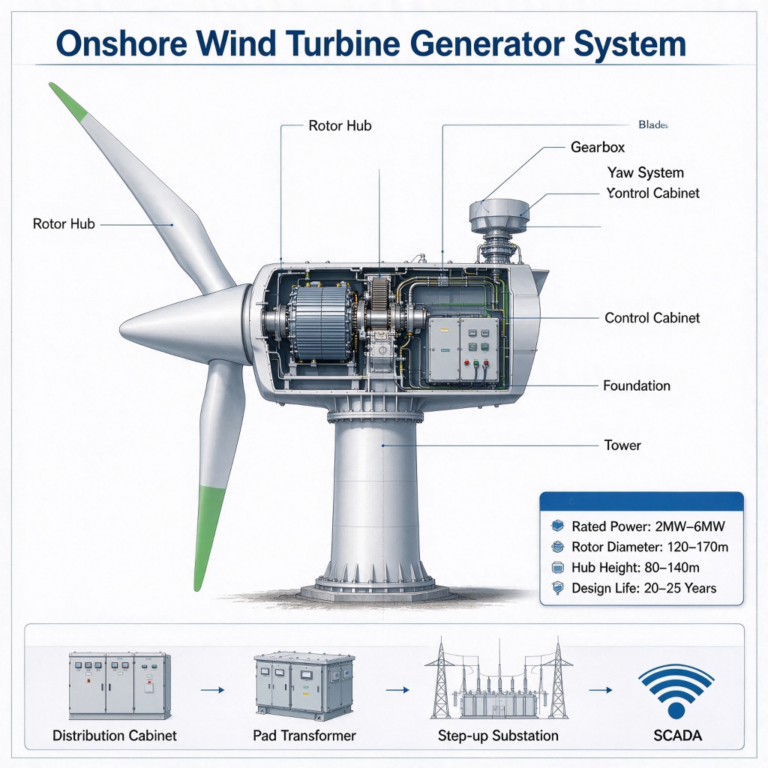
- Onshore Wind Turbine Generator System (2MW–6MW)
- Offshore Floating PV for Oil & Gas Platform
- Wind-Solar-Storage Hybrid Microgrid
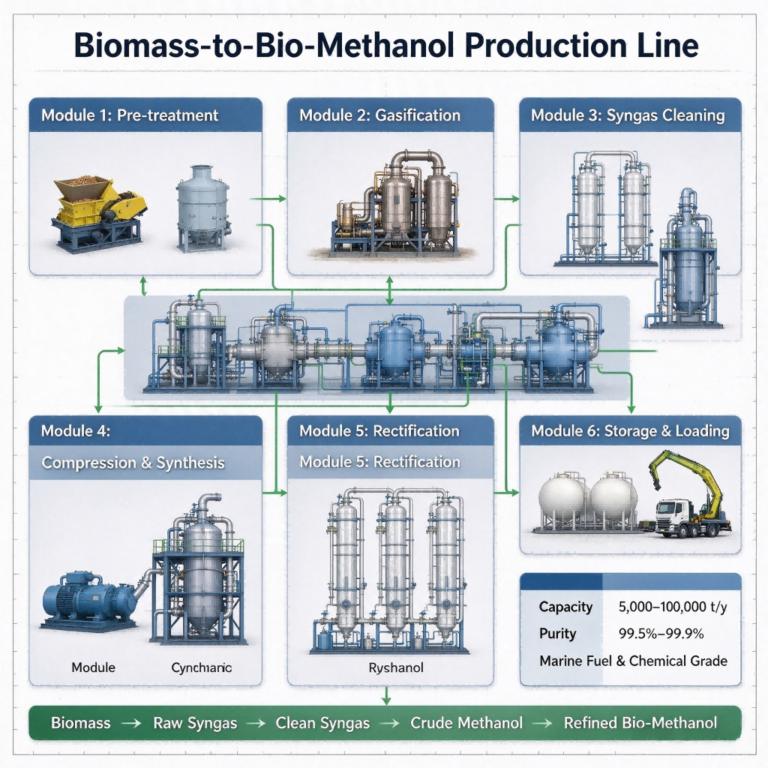
- Biomass-to-Bio-Methanol Production Line

Contact our engineering team to discuss your renewable energy project, technical requirements, EPC solution or service inquiry. We will connect you with the right expert support.