
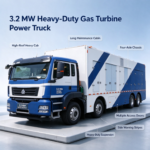
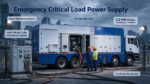
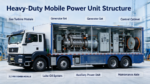
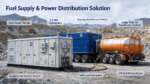
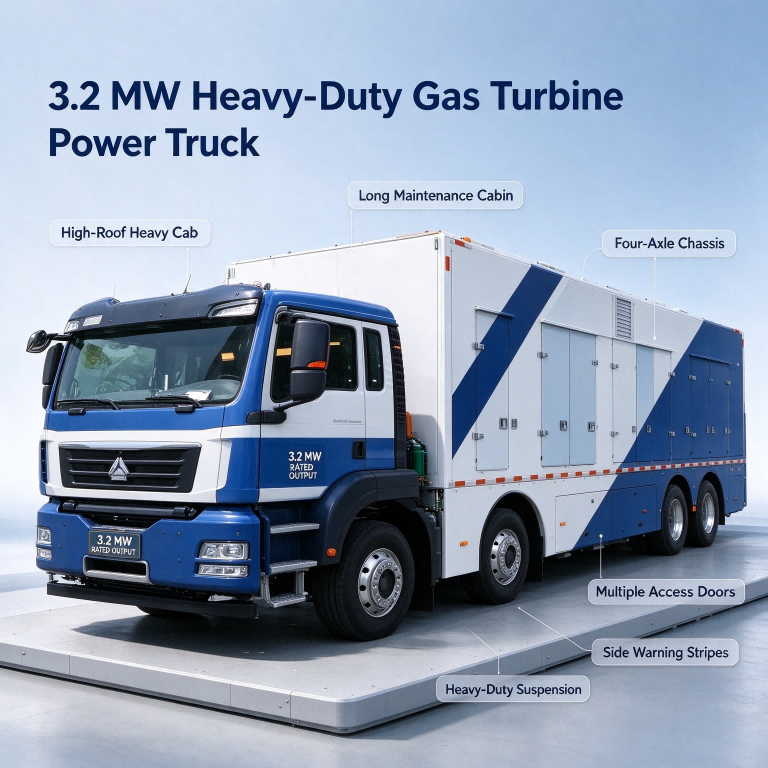
This 3.2 MW aero‑derivative gas turbine mobile power vehicle adopts a dual‑vehicle configuration of main power vehicle plus auxiliary vehicle. Featuring ultra‑fast full‑load startup, multi‑fuel compatibility and extreme‑climate resistance, it delivers reliable mobile power for disaster emergency, remote mining, construction sites and industrial backup scenarios.
3.2 MW Aero‑Derivative Gas Turbine Mobile Power Vehicle
- 1. **Aero‑Derivative High‑Power Density**
- Built on aerospace‑derivative gas turbine technology, compact lightweight design for vehicle‑mount integration, delivering stable 3.2 MW rated output.
- 2. **Ultra‑Fast Emergency Response**
- Achieve no‑load to full‑load within 30 seconds; only 2.5 s recovery for 50% step‑load fluctuation, ideal for time‑critical emergency power missions.
- 3. Extreme Wide‑Range Environmental Adaptability**
- Reliable operation from ‑45 ℃ up to +55 ℃, stable performance at 5000 m high altitude, suitable for alpine, plateau, desert and tropical field sites.
- 4. **Multi‑Fuel Compatibility & Flexible Expansion**
- Standard for diesel / aviation kerosene; customizable to run on natural gas, ammonia or hydrogen. Dual‑vehicle setup supports minimum 8‑hour full‑load continuous runtime.
- 5. **Intelligent Parallel & Grid‑Connection Capability**
- Support multi‑unit automatic parallel operation, auto‑synchronization and zero‑disturbance grid switching, meet complex micro‑grid and backup power requirements.
3.2 MW Aero‑Derivative Gas Turbine Mobile Power Vehicle
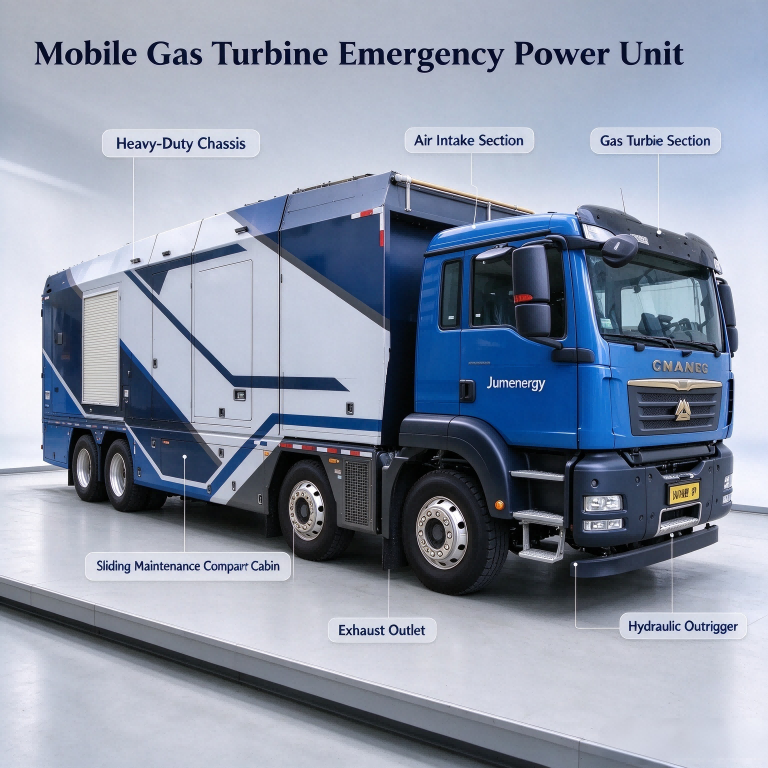
Aero‑derivative gas‑turbine mobile power plant with dual‑vehicle solution: Main Power Vehicle plus Auxiliary Support Vehicle, built for large‑scale fast‑deploy emergency power projects.
Get A Quote
Tell us your power requirement, site conditions and project timeline, our engineering team will get back to you shortly.
Product Introduction
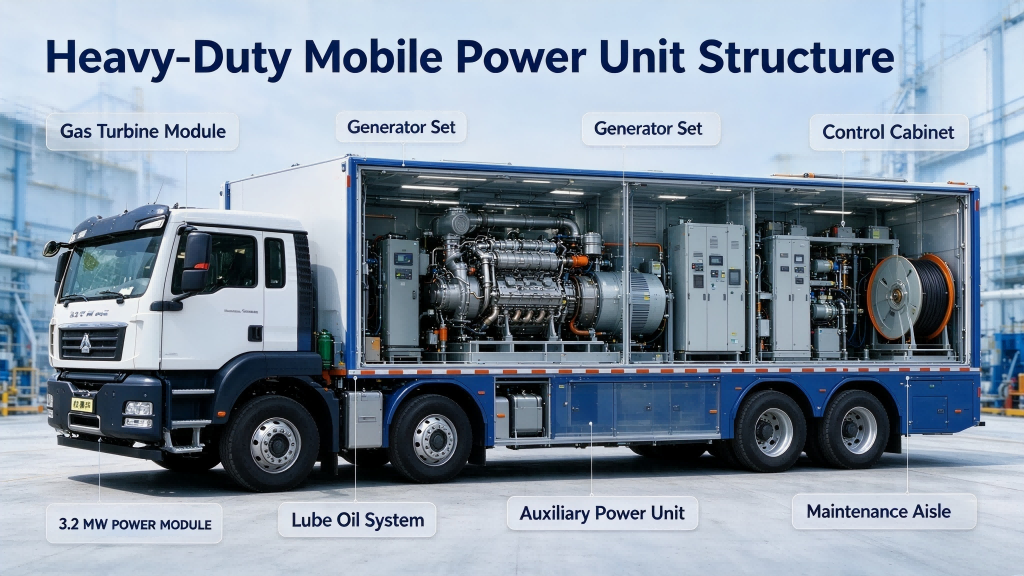
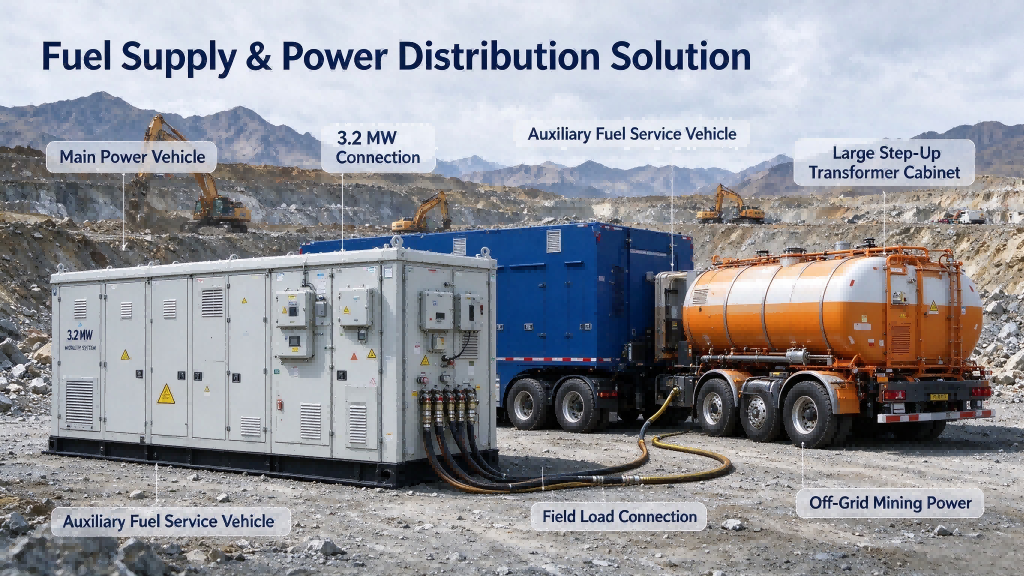
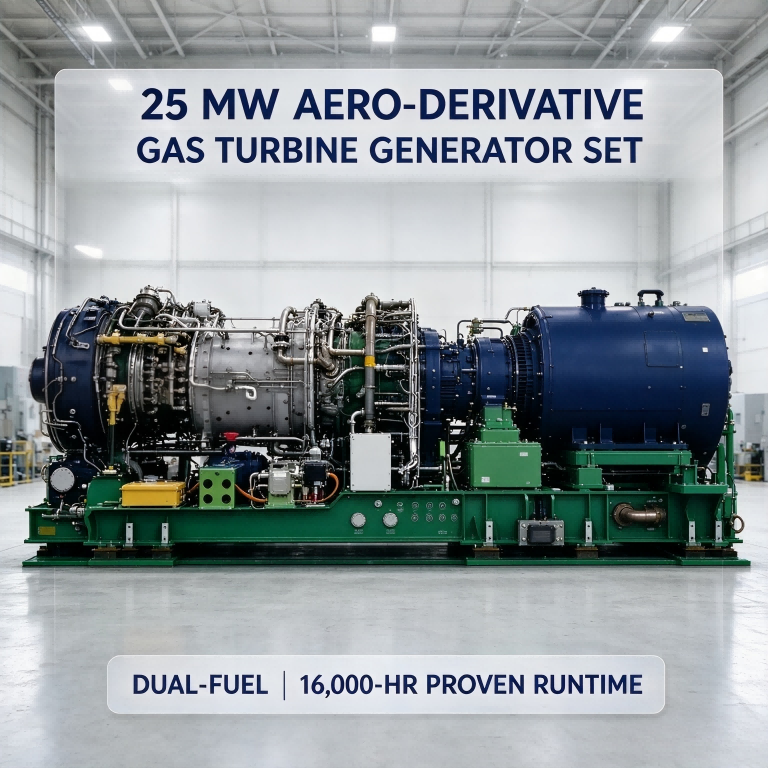
This 3.2 MW mobile gas‑turbine power vehicle adopts mature aero‑derivative single‑shaft gas turbine technology. The complete system uses a modular dual‑vehicle configuration: the Main Power Vehicle undertakes core power generation and system control; the Auxiliary Vehicle provides extended fuel storage, cable reels and redundant safety protection.
Benefiting from high power‑to‑weight performance, ultra‑fast startup response and multi‑fuel capability, the unit supports island standalone operation, multi‑unit parallel running and grid‑tied connection. Widely deployed for disaster relief, large‑event power guarantee, remote mining & oil‑gas fields, construction site prime power and industrial emergency backup.
Core Technical Parameters (ISO Condition)
| Item | Specification |
|---|---|
| Rated Output Power | 3.2 MW |
| Rated Rotating Speed | 1500 rpm |
| Rated Voltage | 10.5 kV / 6.3 kV / 0.4 kV (selectable) |
| Rated Frequency | 50 Hz / 60 Hz configurable |
| Chassis Type | Double‑steering‑axle four‑axle heavy‑duty vehicle |
| Noise Level | ≤80 dB(A) @1 m ; ≤75 dB(A) @7 m |
| Operating Temperature | ‑45 ℃ ~ +55 ℃ |
| Fuel Options | Diesel, aviation kerosene; custom: natural gas, ammonia, hydrogen |
| Dimension(L×W×H) | 10600 × 2530 × 3760 mm |
| Vehicle Weight | 25 t |
| Auxiliary Tank Capacity | 8.7 m³, minimum 8‑hour full‑load continuous runtime |
| Operation Modes | Island, multi‑unit parallel, grid‑connected |
| 50% Load Step Recovery | 2.5 seconds |
Dual‑Vehicle System Composition
Main Power Vehicle (Core Generation Unit)
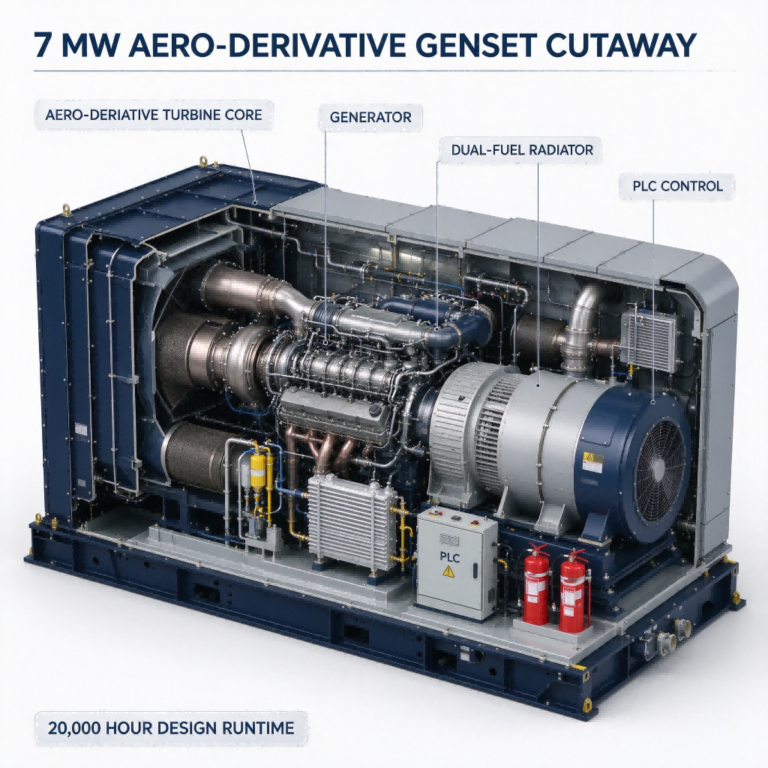
- Heavy‑duty class‑II chassis integrated with aero‑derivative gas turbine and high‑efficiency synchronous generator
- Intelligent control system for grid‑connection and multi‑units parallel operation
- Built‑in automatic fire suppression, real‑time monitoring and full‑running‑data logging
Auxiliary Support Vehicle (Expansion Unit)
- Large‑capacity fuel tank for supporting main vehicle full‑load operation ≥ 8 hours
- Integrated power cable reel for quick on‑site power distribution connection
- Redundant auxiliary control system plus independent fire‑protection devices for higher operational safety
Core Advantages
- Aero‑derivative core design, excellent power density, compact and lightweight for vehicle‑mount deployment
- Ultra‑fast response: complete no‑load to full‑load transition within 30 seconds for emergency scenarios
- Strong environmental adaptability: stable performance under ‑45 ℃ cold and 5000 m high‑altitude conditions
- Multi‑fuel compatible: diesel, aviation kerosene; can be modified for gas, ammonia or hydrogen fuels
- Intelligent auto‑synchronization, load sharing and zero‑disturbance grid switching for multi‑machine parallel
- Low‑noise operation and low‑NOx clean combustion performance
- Fewer wearing components, long service cycle and reduced long‑term operation‑maintenance expense
Important Considerations
- Higher initial procurement cost compared with large‑capacity diesel mobile generator trucks
- Fuel consumption rises when operating under partial‑load conditions far below rated output
- Turbine hot‑section parts require regular professional inspection and scheduled overhaul
- Dual‑vehicle configuration demands larger site area for parking, wiring and on‑site deployment
Typical Application Scenarios
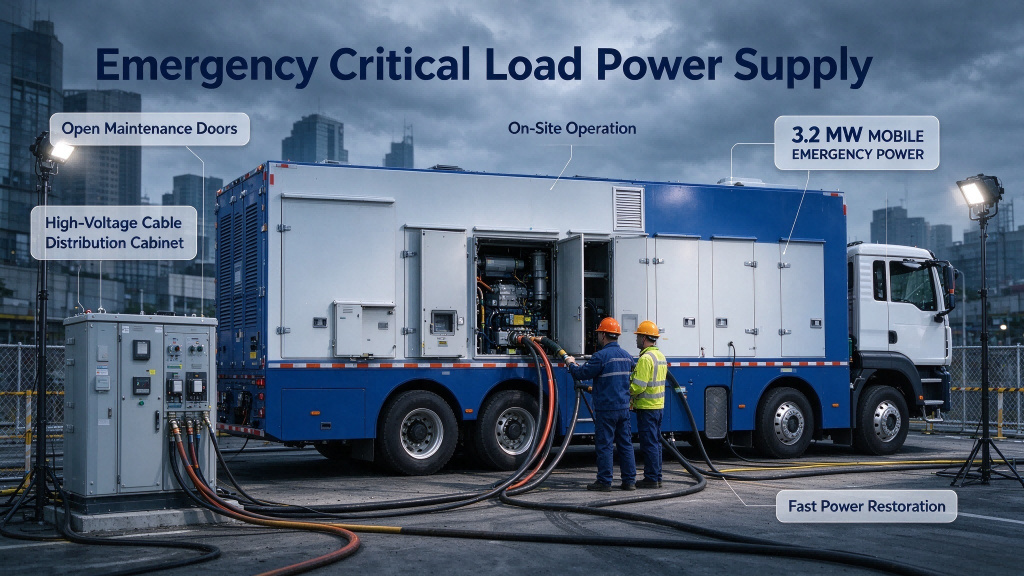
- Urban disaster emergency power: Power supply for hospitals, command centers and telecom base stations during flood, earthquake and typhoon events.
- Large‑event power backup: Reliable temporary power for sports competitions, exhibitions and mass public gatherings.
- Remote resource development: Off‑grid prime power for mining, oil‑gas exploration, heavy equipment and field camp electricity.
- Large‑scale construction sites: High‑capacity temporary power for infrastructure engineering projects.
- Transport hub backup: Emergency power for airports, ports and railway navigation & handling facilities.
- Industrial plant emergency backup: Rapid mobile power to avoid production loss caused by grid blackouts.
Frequently Asked Questions
Q1: What is the difference between main‑power‑vehicle and auxiliary‑vehicle?
The main‑power‑vehicle undertakes core power‑generation, turbine‑generator assembly and master control logic. The auxiliary‑vehicle offers extended large‑volume fuel storage for minimum 8‑hour full‑load runtime, cable‑reel power distribution and redundant safety systems. The combination delivers a complete mission‑critical mobile power solution.
Q2: How quickly can the unit reach full‑load output for emergency usage?
It can complete transition from no‑load to full‑rated load within 30 seconds after startup. Facing 50 % step‑load fluctuation, power recovery finishes within 2.5 seconds to guarantee high‑quality stable electricity for critical loads.
Q3: What extreme environment can this power vehicle adapt to?
Designed for ambient temperature range from ‑45 ℃ up to +55 ℃, stable operation at altitudes up to 5000 meters. It fits alpine cold zones, plateaus, deserts and tropical high‑temperature field‑deployment projects.
Q4: Can multiple 3.2 MW units work in parallel and connect to public grid?
Yes. Equipped with self‑developed auto‑synchronization control algorithm. It supports multi‑unit parallel running with automatic load sharing, manual / auto quasi‑synchronization grid‑connection, and reverse‑synchronization load transfer when mains power recovers.
Q5: Is natural gas, ammonia or hydrogen fuel support available?
Standard configuration runs on diesel and aviation kerosene. Natural‑gas, ammonia or hydrogen fuel mode requires custom modification for combustion chamber and fuel supply modules, available as project‑specific non‑standard development.
Q6: What are the maintenance requirements for the aero‑derivative gas turbine unit?
Compared with traditional large diesel mobile generators, gas‑turbine reduces reciprocating wearing‑parts. Nevertheless, hot‑section components need periodical inspection and scheduled overhaul. We provide global after‑sales service, genuine spare‑parts kits, on‑site commissioning and technical training support.
Get A Quote
Tell us your power requirement, site conditions and project timeline, our engineering team will get back to you shortly.



Get in touch
Enter your serial number so we can connect you to the original dealer for support, repairs and warranty requests.
Get in-depth on-line training about our products and solutions by Victron experts. Create a free Victron Professional account to join trainings, see firmware changelogs and get access to all the other expert know-how and tools.